Brett Hetherington

Banner photos: Cornelia Kraft

Home


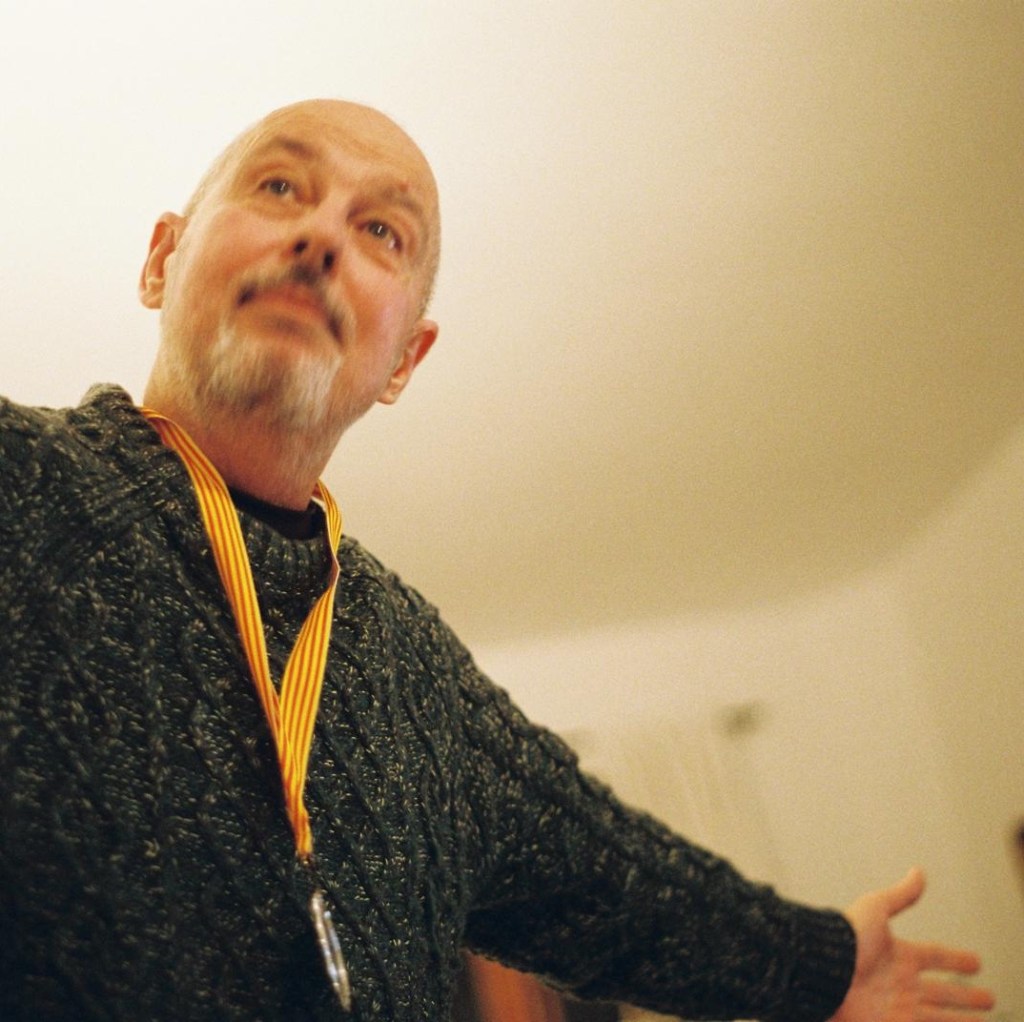
Photo: Pedro Duarte .

This is the website of Brett Hetherington:
a writer, teacher and blogger living in Catalonia, northern Spain.

He is the author of “The Re-Made Parent,” a non-fiction book available to publishers through the Antonia Kerrigan Literary Agency in Barcelona.


Blog

“When we are born, we are all Moors” ...

…says a character in Àngel Guimerà’s play La filla del mar (The daughter of the sea, 1900.) 

Agata, this fictional female whose “origins are unclear” was born among Moors and for this simple reason she is despised and considered to be a heretic. The theme is just as relevant today. Human beings still judge and discriminate against other human beings over aspects of our identity that are beyond our control. We still love hating.  

Xavier Fàbregas believed that “the theme of the misfit, the outsider” is a reoccurring one in Guimerà’s Catalan literature and partly puts this down to the author having parents who were unmarried.

A wet nurse, a Jewish boy, a mad woman Guimerà’s choice of individuals to focus on his writing seems to confirm his affinity for society’s overlooked.

According to Ramon BacarditHe wrote about conflicts of passion that, at bottom, implied power relations, frequently highlighting issues of non-adaptation…[as] the backdrop onto which he projected relationships containing…elements of masochism and tormented sensuality.  

The street I am soon to live in is named after Àngel Guimerà.


Comments (0)

Add Comment


Seeking shelter from the economic storm

The current plight of Spain’s immigrants is now being recognised in the international media.

Andrea Comas reports in Time magazine that “Over a million migrants have lost their jobs, homes and small businesses in a boom-to-bust cycle not seen since the Great Depression…And unemployment isn't the only issue. The rate of mortgage delinquency among foreigners in Spain is 10 times higher than among native Spaniards. Tax revenue and social security contributions, along with consumer spending, are also falling within the immigrant community, making it all the more difficult for Spain — with one of the highest deficits in the OECD at 11% — to stimulate its economy.”

 Josep Oliver, an applied economics professor in the Universidad Autónoma de Barcelona and one of the lead authors of Yearbook of Immigration in Spain 2009 is quoted saying: “The Spanish case is a lesson. If a country's economy is based on low-skilled labor, like construction, and there is a crisis, the blow can be traumatic."


Most immigrants…will weather the storm because they have little to look forward to back home.”


Comments (2)

Seeking shelter from the economic storm

The mortgages were predatory, and in Spain they are on the hook for the full amount, even after the home is repossessed. There were also financial entities (specifically Caja Madrid) fleecing immigrants with fake loans (the real money went to their partners) which they then reclaim from the immigrants. Three people went to jail for this in Girona, and there have been many cases here, but they got smarter and made it harder to prove.

JP

Seeking shelter from the economic storm

Bastards! That all makes me glad that we got our recent mortgage for our new place with Caixa Penedes. They were slightly more expensive than Bancaja who were our other option but the service, help and human treatment from the people we had known for the last four years was wonderful.

Brett

Add Comment


A prince of reason

Nationalism was a reaction to the forces of globalization and modernization in the 19th century, a reaction to "population explosion, rapid urbanisation [and] labour migration."

Ernest Gellner writing in 1983 but is this sentence still relevant to Catalan nationalism today?


Comments (0)

Add Comment


Ignore these changes at your peril

[Photo: Cornelia Kraft]

It makes me happy to see that others enjoy what I enjoy. 

Vicente Molina Foix in this piece in El País writes about riding in the Madrid Metro: 

I like to see the juxtaposition of various skin colors, and hear the melody of incomprehensible languages, as the train of the future approaches on the rails of life.

Here is a man at ease with one of the biggest changes to Spanish life in the last few decades. He realises that this country is becoming one great human paella with a tasty mixture of ingredients. 

Those Catalans and Spaniards who make the effort to appreciate the benefits of migrants from across this odd little planet will be doing little more than opening their senses.

The continuing mixing of cultures is one of the great success stories of human history and closing ourselves off from the results of migration is as pointless as trying to ignore the music from a neighbour’s radio drifting into our ears. 

Migration in Europe will not end, though it has slowed down somewhat in the last couple of years due to the Great Recession.

The human animal that adapts best to the changes in its surroundings will continue to be the human animal that thrives.


[This blog was also published as a Letter in El País ENGLISH EDITION WITH THE INTERNATIONAL HERALD TRIBUNE on Saturday, 10 August, 2010 under the title "Savoring the melting pot."]


Comments (0)

Add Comment


An interview with Salvador Dalí

"I adore three things, weakness, old age and luxury."

He was a public supporter of Franco but apart from that Salvador Dalí had an interesting and highly original mind, and it can be appreciated with him speaking his own style of English in this video link here.

Amongst other things (and despite the patronising interruptions of the interviewer) he talks about his genius, the subconscious, weakness, old age and luxury, death, religion, and dreams.

Comments (0)

Add Comment


Categories

spain/catalonia (88) Primo Levi (2) china (2) Vilafranca del Penedès (3) food (5) public/private (13) technology (4) europe (10) infrastructure (6) Antonio Muñoz Molina (3) writers/writing (12) central america (2) public language (15) unethical business (18) the middle east (7) religion/beliefs (30) u n c l a s s i f i a b l e (15) morocco (3) zanzibar (2) housing (8) japan (10) history (22) immigrants (17) health care (8) england (11) france (6) music (9) Bob Dylan (3) italy (8) power (39) australia (17) addictions (6) gypsies/the roma (3) the USA (19) George Orwell (8) charities (3) the economy (34) education (16) science (5) men/women/gender (14) social classes (14) the media (27) workers (21) parents/children/parenting (24) human rights (62)